Northern Ireland rarely makes the national news for anything remotely uplifting. We’re normally at the centre of national consciousness for being embarrassed by our infantile politicians, for being light years behind the rest of the UK when it comes to marriage equality and reproductive rights, or for being a political pawn in a Brexit-fuelled custody battle between Great Britain and the Republic.
But this year, thanks to Lisa McGee’s Channel 4 sitcom Derry Girls, we’ve been a talking point for all the right reasons.
The success of the new Irish comedy show has been unprecedented, and a second season was commissioned immediately after the first episode aired to 1.7 million viewers. It’s also been a big hit on social media, having trended worldwide on Twitter and – the true measure of success - having spawned a million memes. Irish people have been charmed by its spot-on, funny portrayal of our part of the world, and it’s even been a hit with audiences from afar who profess only to understand half of what the characters say.
The reasons for Derry Girls’ popularity are tenfold: the cracking cast, the nostalgia-inducing soundtrack (which feels all the more poignant after Dolores O’Riordan’s passing), and the witty one-liners (the Famine being dismissed as “They ran out of spuds, and everyone was raging” was a high point) are all to thank.
“The focus on injustice and oppression can come at the expense of reflecting the spirit, creativity and craic which characterise our nation.”
But one of the programme’s particular strengths is its ability to transform the quotidian into something heartfelt and funny, and to provide an accurate overview of life in Northern Ireland. Sadly, people outside of our country/region (the terminology’s up for debate) can be incredibly ignorant about us, as evidenced by the now-infamous Channel 4 News vox pop that saw the Northern Irish border cutting through Offaly and Kildare. Something as ostensibly insignificant as seeing our own accents, slang and culture be so well-received in the UK has felt nothing short of miraculous.
What’s more, film, theatre and literature focusing on Ireland or on Northern Ireland, while brilliant, has been characterised by a frustrating over-emphasis on war, violence, and the havoc that dominating religious organisations wreak on people’s lives. The Magdalene Laundries, ’71, Philomena and Hunger are all excellent and important narratives, but their focus on injustice and oppression can come at the expense of reflecting the spirit, creativity and craic which characterise our nation. Derry Girls features tenets of typical Irish life that I recognise from my own experience of growing up in ‘00s Belfast – from the chippie being more revered than church, to sponsored fasts for starving Africans which inadvertently peddle the white saviour stereotype – and in doing so, provides a much more accurate overview of what growing up in Northern Ireland is actually like.
Derry Girls also deserves praise for its sensitive treatment of Northern Ireland’s history and of the civil war which was still raging in 1994, the year in which the show takes place. The writers refuse to sanitise Northern Ireland’s past, or over-contextualise our idiosyncrasies for non-native viewers: the obligatory acknowledgement of the Derry/Londonderry name dilemma was rightly acknowledged in the opening scene, the irony of a British boy denouncing the Irish for repressing his civil rights was there for those who wanted to chuckle at it, and the finale’s juxtaposition of teenage joy with warzone news reports packed a heart-breaking punch.
“Erin’s mum being more panicked at the thought of cooking on a Friday night than she was by yet another bomb scare is the most accurate sixty seconds of TV I’ve seen all year.”
In general, though, Derry Girls refuses to place the conflict front and centre at the expense of depicting normal life, which, for most people during the Troubles, simply carried on. Yes, we see armed soldiers boarding school buses – but we also see Michelle assessing which of them are ‘rides’. Masked gunmen stormed Erin’s boring uncle’s house and stole his van – but the McCools know that the real tragedy is his spoiled shoelaces. In fact, Erin’s mum being more panicked at the thought of cooking on a Friday night than she was by yet another bomb scare is the most accurate sixty seconds of TV I’ve seen all year. Without ever being mawkish or sentimental, the show represents the Troubles in keeping with how they were perceived by those who lived through them, and who didn’t have the luxury of doing anything other than getting on with it: as a constant, scary, peripheral inconvenience, but one which mostly manifested itself in traffic disruptions.
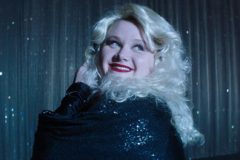
Louisa Harland and Saoirse-Monica Jackson in Derry Girls (2017)
Perhaps the best aspect of Derry Girls is its realistic portrayal of female friendships and of female adolescent sexuality, a theme which is frequently brushed under the rug. Cinematic depictions of young women can be dodgy at the best of times, and Irish TV programmes’ and films’ representations of young women can feel particularly tired. All too often, the Irish girls and women we see on screen are limited to being victims of abuse, shamed unmarried mothers packed off to serve their penance with the nuns, or put-upon housewives who stay home while the men are out fighting for freedom.
But Erin, Orla, Clare and Michelle are adventurous, flawed, funny protagonists who squabble, scheme, make idiots out of themselves, mess up, and still have each other’s backs. They’re not manic pixie dream girls like Skins’ Cassie or mere objects of male desire like the Inbetweeners’ Carli – these Derry girls get to be as boisterous, loud and lustful as any male teenager depicted on TV, while cousin James frets away in the background.
“It feels refreshing and rebellious to watch young female characters be so open about their desire, sexuality and sex lives, or lack thereof.”
In particular, the significance of Clare’s coming out can’t be downplayed. Given that gay marriage was only legalised in Ireland in 2015, and that it remains entirely illegal in the North, having an openly gay girl at the heart of the country’s current most-loved show is a massive deal, and would have seemed inconceivable just a few years ago. In Northern Ireland, the vast majority of secondary schools’ sex education is still facilitated by religious organisations, which leads to a heteronormative, cissexist and inaccurate portrayal of sex as something shameful and dirty that’s done to women, not by women, and that’s to be enjoyed by heterosexual married couples alone.
Throughout my education, gay people, when alluded to at all, were always painted as confused, lost sinners deserving of our pity and compassion. It feels refreshing and, given the bigoted attitudes of some of our Christian fundamentalist politicians, rebellious to watch young female characters be so open about their desire, sexuality and sex lives, or lack thereof.
Ultimately, Derry Girls’ stellar rise has felt timely. In an era of faux-confused ‘Can women be funny?’ debates, a hilarious, female-centred comedy about growing up in a warzone centred around the trials and tribulations of four loveable, realistic protagonists is a tender, joyful antidote to the common portrayal of Northern Ireland as a parochial hole in the ground.
However, although the tanks and armed soldiers portrayed in the programme may be a thing of the past, were the show set in 2018, Clare still wouldn’t be allowed to get married. Michelle’s aunty Kathy would still be forced to fly to England for her abortion. The conflict we thought we’d left behind in the ‘90s risks rearing its ugly head again, thanks to British politicians who are willing to gamble with human lives in order to maintain their electoral majority.
Derry Girls is a show grounded in family, friendship, and love, and it’s characterised by the hope and grit that we need as much now as we ever did. Whilst this comedy has shown us how far Northern Ireland has come, it should also remind us that we have further still to go.