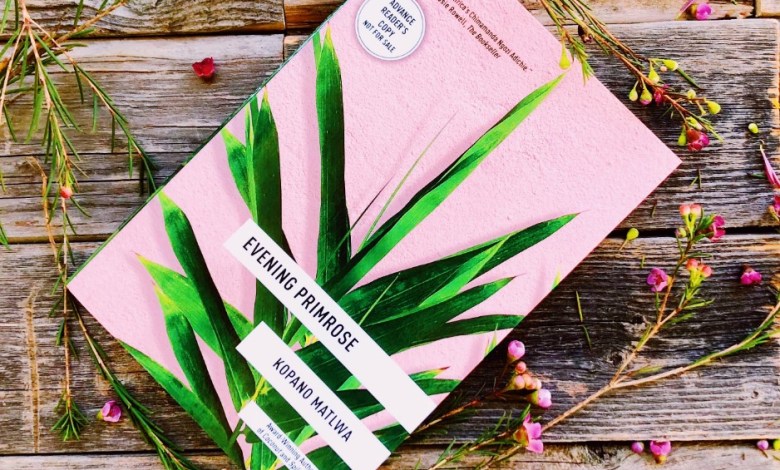
Kopano Matlwa has been described as ‘South Africa’s Chimamanda Ngozi Adichie’ for her approach to this heartfelt examination of xenophobia, South African society, mental health, family and hope.
Set in post-apartheid South Africa, this 150 page four part novel is written as a series of journal entries by Masechaba, a recently graduated doctor working in a hospital. Masechaba moves in with colleague and Zimbabwean friend Nyasha and quickly starts to realise that among others, Zimbabweans, Nigerians, Somalis and Chinese immigrants are racially targeted and those who support them are derided, threatened and attacked.
Although apartheid was abolished in 1991, the effects of racial and social discrimination, particularly towards women, are still dominant in contemporary South African society. Gender based violence remains a significant issue with partner violence accounting for 40% – 70% of female murder victims with an estimation that a woman is raped every 17 seconds. While there are no official statistics on the number of racially driven hate crimes, human rights groups have been able to document a disturbing pattern of violent attacks ranging from mob violence, to rape and murder. It is very clear that issues of gender and race still prevail, and are fueled by the increasingly divisionist landscape of contemporary politics.
“As Matlwa highlights in her novel, gender, racial tensions and global politics continue to impact and restrict progress and the reformation of women’s rights.”
In 2015, the United Nations General Assembly (UNGA) launched the Strong Girl Campaign with the aim of engaging the South African government with women rights by putting women and girls at the centre of their UNGA commitments and Sustainable Development Goals (SDGs). In response to this, the South African government has produced a number of policies and legislation in pursuit of equality such as Section 9 and the Employment Equity Act No 55. Further to this, investments in education have resulted in an increase in the enrollment of girls and women in learning institutions and the African Union (AU) named 2015 the Year of Women’s Empowerment. Read more about A Beginner’s Guide to Being Mental by Natasha Devon.
But as Matlwa highlights in her novel, gender, racial tensions and global politics continue to impact and restrict progress and the reformation of women’s rights. Trump’s ‘bull in a china shop’ approach to the UN’s peace agenda – and international politics more broadly – undoubtedly contributes to global divisions and impedes progress. And policies such as his ‘Global Gag Rule’ will no doubt have a direct and sincere impact on women across Africa, such as those characters in Matlwa’s novel.
Matlwa’s book is therefore timely, engaged, politically aware and wholly relevant. It is a tragic story filled with engaging characters and a captivating narrative – I read it in one sitting!
“The structure of the novel… allows for raw emotional exposure alongside gossipy, colloquial and humorous anecdotes.”
The structure of the novel cleverly responds to key moments in narrative, and the format – journal entries – means the prose is direct and powerful. This allows for raw emotional exposure alongside gossipy, colloquial and humorous anecdotes. It is never clear who these accounts are directed towards, giving agency to the reader.
Part one of Evening Primrose offers an initial insight into instances of xenophobia in South African society. Matlwa uses this context to explore Masechaba’s mental health, situate her tragic family history, her slowly breaking friendship with Nyasha, the distressing working conditions at the hospital and delves into Masechaba’s early signs of depression.
Throughout parts one and two, the reader becomes increasingly aware of Masechaba’s anxiety and depression; her journal entries become shorter and the pace quickens. While at times these sections are too lengthy, they are wholly necessary to give a true representation of the extent and impact of her anxiety. As she tries to vocalise what she terms “cracks in my psyche”, the structure itself also becomes skilfully ‘cracked’ to mimic this narrative. Conversely as she writes of loss, namely the suicide of her brother, the extracts are longer, profound and more reflective. Matlwa’s examination of these charged topics is written with tenderness.
“Matlwa’s accomplished manoeuvrability enables her to intertwine a heart wrenching tragedy with overriding questions concerning race, women’s rights and notions of friendship and family.”
For part two, Matlwa lightly shifts between the multiple subject matters and taps into the readers’ emotions with carefully constructed prose. The reader learns more about Masechaba’s activist response to her experiences in part one, particularly xenophobia, as she tries to fix her breaking friendship with Nyasha. This short book is made powerful by Matlwa’s ability to lucidly combine several loaded themes and address them subtly, frequently and powerfully throughout each of the four parts.
In part three, Masechaba experiences a life changing event which has a devastating impact on her depression and work at the hospital and as an activist. Again, Matlwa’s accomplished manoeuvrability enables her to intertwine a heart wrenching tragedy with overriding questions concerning race, women’s rights and notions of friendship and family.
In the shorter part four, we discover the reason for the title of the book and the importance of family. Placed beautifully amid a quote from Masechaba’s mother, we discover how with hope, something truly magnificent can come from a place of sheer darkness.
The most moving aspect of this book, and arguably the key theme, is Masechaba’s sense of hope. And although this story may be fictional, it is for far too many women and girls, reality. I am left inspired and provoked by both a poignant story and an enthralling piece of writing.